I used to hate this advice. Now I give it.
|
“Sell ’em what they want. Give ’em what they need.” I used to hate this advice. It felt manipulative. Like the message was:
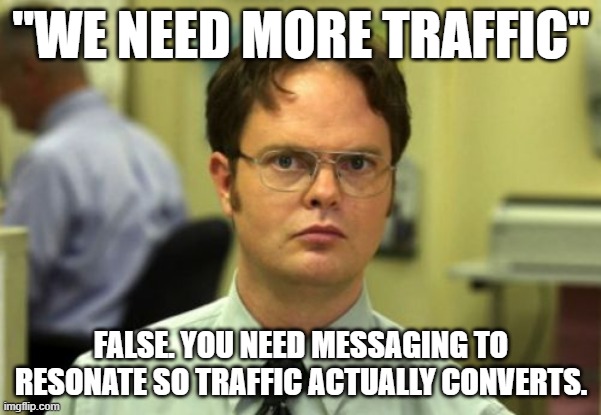
And maybe for some people, that’s exactly how they use it. But over time, my perspective shifted. I’ve come to see this line as not only ethical but essential—when it’s grounded in empathy, expertise, and a deep understanding of your buyer. 💡 So what shifted for me? I realized it’s not manipulation, it’s psychology. (Oh, and before you come at me, I know marketing and sales are not the same. That being said, the purpose of copywriting is to persuade people to take a desired action. If that action is booking a consultation, purchasing an offer, or any kind of conversion, you’re in sales territory.) 👋🏻 Welcome! Each week I share insights that turn why they buy into how you market (and sell). Not subscribed yet? Click here. Why buyers misdiagnose their problemsWe’re pretty sh*tty at knowing what we actually need. Sometimes it’s because we’re not the expert. If we had the answer, we wouldn’t be looking for help in the first place. Other times, it’s because we’re too close to our own business. That’s the expert trap, being so immersed in our own world that we can’t see the bigger picture. ➡️ Think about it like this: symptoms vs. problem. Someone shows up with a sore throat, body aches, and fatigue. They’re convinced it’s the flu. But those same symptoms could point to a cold, Covid, or something else entirely. If they’ve already decided it’s the flu, they’ll ignore any solution you offer for a cold. But if your solution targets the symptom (say, the sore throat), they’ll take it. And when it works, you’ve not only solved the symptom they cared about, you’ve also addressed the bigger problem underneath. That’s what “sell them what they want, give them what they need” really means. You don’t waste energy arguing over the diagnosis. You meet them in the symptom they recognize and solve the problem they can’t see yet. From symptoms to solutionThat’s exactly what came up in a recent strategy session. My client, a web design strategist, told me about her prospects. Nine times out of ten, they come in saying: “We need more traffic.” She knows that’s rarely the real issue. Sometimes:
And this is the moment where she decides whether she wins them or loses them. She can try to educate them about why they’re wrong. Explain all the behind-the-scenes factors they don’t see. Which sounds noble, but in practice, it just creates more friction for her and for them.
Or she can dig deeper to understand why they think they need more traffic, how it’s showing up in their day-to-day, and what proof they’d need to feel confident the problem was solved. This is the psychology at play: people latch onto the symptom because it feels concrete. Traffic is a metric they can see. What they can’t see is the trust gap, the missing resonance that makes the right audience click, convert, and commit. That’s the difference between a felt need and a functional need. The felt need is the pain they can name—‘we need more traffic.’ The functional need is the underlying job they’re hiring you to do, like attracting the right buyers or getting people to take action once they land. Here’s how that shift shows up in copy:
And maybe you’re wondering: if a client asks for traffic, why not just give them traffic? Isn’t that good enough? The answer is no. Because solving the symptom without solving the root leaves them frustrated, and you lose credibility when the quick fix doesn’t last. That second path doesn’t mean ignoring the real issue. It means meeting them where they are and guiding them to what they actually need. I’ve felt this tooAnd let’s be honest. None of us are immune. I’ve noticed this in my own business as I’ve outsourced. Sometimes people take my request at face value, deliver exactly what I asked for, and I end up more overwhelmed than before. The problem? I might not have known the right thing to ask in the first place. That’s why I hired them, for their expertise.
And sometimes, I was asking the right questions. But instead of thinking like a strategic partner, they treated themselves like a vendor, trying to make their solution fit my request instead of digging deeper to uncover what I actually needed. That’s the distinction buyers feel too: do you act like a vendor filling orders, or a partner helping them solve the problem they can’t articulate? When experts only execute the request instead of challenging it, they put the burden back on me to diagnose the problem. And that’s not my job. Your clients feel the same way. They don’t just want deliverables (usually). They want someone who can connect the dots, ask the right questions, and uncover the real need behind the request. The real purpose of discovery callsA good discovery call isn’t about pitching. It’s about diagnosing. Listening. Probing deeper. Without that, you risk two equally bad outcomes:
Buyers don’t want to feel lectured. They want to feel understood. So where’s the line? How do you avoid creating friction but still steer them toward what they actually need? This is where skill comes in: framing your questions so they feel seen, not schooled. Discovery is about helping them connect the dots for themselves. The real skill is to meet them where they are, understand how they’re experiencing the symptom, and then frame your solution in their language. So they see how what you deliver gets them what they think they want and what they actually need. Proposals that connectTo be clear: I’m not suggesting you be vague or hide the details. Your proposal should absolutely spell out the deliverables and the plan. The difference is in how you frame it. You’re not just saying: “We’ll redesign your website.” You’re saying: “We’ll redesign your website so it resonates with buyers earlier in their journey—so you’re not just relying on referrals anymore.” See the difference? One lists a task. The other ties it to the outcome they actually care about And when you do this well, something powerful happens: clients feel like you “got them” in a way they couldn’t articulate themselves. That moment builds trust. And that trust loops back into longer relationships, more referrals, and bigger projects—because they want to keep working with the person who solved the problem they couldn’t even name. One more objection: “Isn’t it deceptive to sell someone one thing and deliver another?” Not if it’s framed through their lens. The proposal makes clear what you’ll deliver, but the story you tell connects it back to why it solves the problem they believe they have. That’s empathy, not deception. The danger of assumptionsOne of the biggest mistakes I see founders and marketing teams make is they assuming they already know their audience. But you can’t uncover what people actually need without digging for it. That’s where audience insights and client interviews come in. It’s why I use Jobs-to-Be-Done (JTBD) theory, not just to ask what people want, but to understand the job they’re hiring your product or service to do. And here’s the danger: the assumptions that feel the most true are the ones that trip you up. The illusion of knowing. You think you understand your audience because you used to be them, or because you’ve served a handful of clients like them. But markets evolve. If you don’t refresh your insights, you end up building messaging for the buyer you had. Not the buyer you have. And it’s why vague personas are useless. “She’s 35, lives in a suburban neighborhood, drives a Toyota.” Okay… but what does that tell you about how she makes decisions? Nothing. Demographics aren’t meaningless: where you live, how many kids you have, those details shape context. But what really matters is the psychographics:
When you understand that, you stop making assumptions. You stop writing for “everyone.” And you start creating messaging that resonates because it’s based on how your audience actually thinks and makes decisions. Why I rarely start with copywritingWhen I first started, most clients came to me asking for a website. And sometimes, yes, that’s exactly what they needed. But more often, as I asked questions, I found that their positioning was outdated or their messaging wasn’t clear enough to support the copy they wanted me to write. That’s when I realized: copy alone can’t carry the weight if the strategy underneath isn’t solid. Here’s how I define it:
Here’s the psychology behind it:
No copy is effective without strategy first. Which is why most projects now happen in phases: We start with positioning and messaging strategy clarifying where you fit, what sets you apart, and how to talk about it in a way that resonates. Then we shift into implementation, applying your messaging across all your marketing. Finally, we get tactical writing the actual assets: your website, pitch decks, one-pagers, brand collateral, email sequences, and more. It’s not that I don’t do copywriting anymore. It’s that the copywriting works because the strategy comes first. Sell what they want vs. give what they needHere’s how this looks in practice: 💻Tech startup
And they’re not usually wrong. But often, there’s more underneath the request.
But sometimes they are wrong. I recently did a website copy audit because the client thought they needed new content. The copy was strong. The problem was the design and UX. The difference between staying referral-only and scaling beyond itReferrals build businesses. But they don’t scale them. Referrals hand you credibility. Someone else has already vouched for you. But scaling requires resonance. A stranger who’s never heard your name needs to read your site, your posts, or your emails and instantly feel, ‘this person gets me.’ Without positioning and messaging, you never make that leap. Today’s buyers are skeptical. They’ve been burned by hype and hollow promises. They’re fact-checking, comparing, and watching to see if you actually get what it’s like to be them. That’s why “sell ’em what they want, give ’em what they need” isn’t a manipulative trick. It’s the most empathetic and ethical way to market. Because it starts with truly listening and ends with solving the right problem. When you understand what your clients think they want, and connect it to what they really need, you build trust. And trust is what scales. Your job isn’t to trick your clients or outsmart them. It’s to listen deeply, connect the dots, and show them how what you do bridges the gap between the symptom they see and the solution they actually need. What’s one thing your clients often say they want, and what do you know they really need? I’d love to hear your examples. Just hit reply. And if you’re ready to make sure your website speaks to more than referrals and actually scales with you? Let’s talk. Ready to put this into practice?✅ This week, listen closely to how your clients describe what they want. Write down the exact words they use. Then run those “felt needs” through three questions to uncover the functional need hiding underneath:
Once you uncover the functional need, write your copy to reflect it. Don’t just say, “We’ll design you a modern office.” Say, “We’ll create a workspace that helps you attract top talent, inspire your team, and show clients who you are the moment they walk in.” That’s how you sell them what they want while giving them what they need. A couple quick notes...📊Want the 2026 Solo Business Barometer—a data report on growth, offers, and AI marketing for solo founders? Fill out the 8–10 minute survey. At 100 responses, Adriana will share the results with all participants. 🏫Catrina MItchum and I just hosted a LinkedIn Live on spotting crappy courses. Now we're considering a workshop on creating and marketing effective courses. Interested? Reply with "workshop." If there's enough interest, we'll make it happen. Until next time, Stacy When you're ready, here's how I can help:✍️ Copy Audit: Get a fresh set of eyes (mine 🙃) on your website, sales page, or key asset. You’ll walk away with clarity, confidence, and easy-to-implement fixes. 🧠 Strategy Session: Not sure what’s working, what’s not, or where to start? Let’s dig in. A past client said it felt like "therapy for her brand". 🤝 Let’s Talk: Thinking bigger? If you’re looking for done-for-you support or a more comprehensive project, let’s hop on a free discovery call and talk about what that could look like. I'm booking for November-ish so now's a great time to chat. |
Helping referral-grown brands become the obvious choice
Clients and referrals love you, but cold leads hesitate. I help you close the trust gap with positioning and messaging strategy, so even strangers see you as the easy yes.